
Pump Design Software |
TURBOdesign Suite

The inverse design method can be applied to all types of axial, mixed flow and centrifugal pumps. Our software enables design of high efficiency stages at multiple operating points with direct control of cavitation.


Our TURBOdesign Suite software applies the 3D Inverse Design method to the design of pumps. With inverse design you can optimize performance, increase efficiency and reduce development time by putting designers in direct control of the aerodynamic design process.


Breakthrough Diffuser Designs


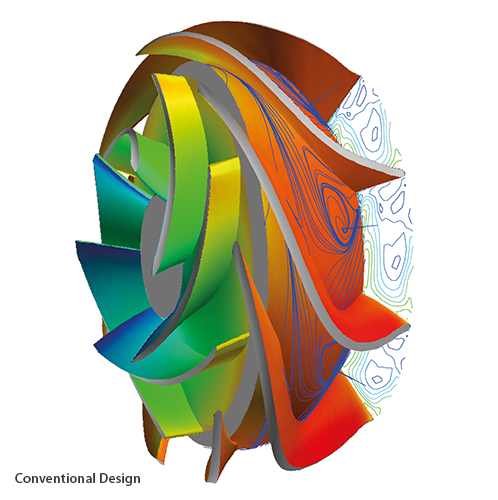
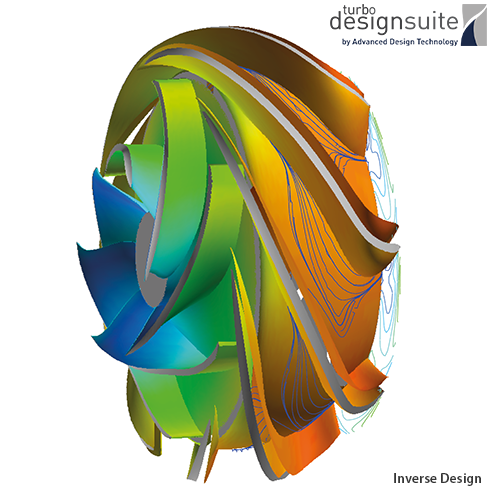
3D Inverse design method allows direct control of 3D pressure field and hence can be used to eliminate the corner separation in Vaned bowel diffusers, which results in significant reduction in stage efficiency particularly in multistage applications.


See below a comparison between conventional design versus CFD results of TURBOdesign1.


Pump Applications


A brief summary introduction to the different pump applications you can use TURBOdesign Suite for

Case Studies


Success Stories - how our customers overcame design challenges by using TURBOdesign

Consultancy Summaries


ADT's Engineering turnkey turbomachinery solutions for leading manufacturers across key industries

Webinars

Don't miss out. View our webinars here.

Watch Now

Publications

Interested in our research? Access our technical papers here.

Discover our Findings

Blog Articles

Enhance your knowledge. Explore our blog articles here.

Get Inspired


Frequently Asked Questions

.

TURBOdesign Suite is a comprehensive software platform for designing highly efficient pumps. It moves beyond traditional methods by using a 3D Inverse Design methodology. Key features includes:
3D Inverse Design: Generates blade geometry based on desired flow performance rather than manual trial-and-error.
Meanline Tools (TURBOdesign Pre): For rapid sizing and preliminary design of pumps.
Automated Volute Design (TURBOdesign Volute): Quickly creates optimal volute geometries to match the impeller.
Multi-Point Optimization: Ensures performance across a wide operating range, not just at the design point.
Wide Application Range: Suitable for centrifugal, mixed-flow, and axial pump types, using any type of working fluid.

The main difference is the methodology. Traditional software relies on "direct design," where engineers create a geometry, test it using CFD, and slowly iterate towards the desired performance .


TURBOdesign Suite uses 3D Inverse Design. Instead of guessing the shape, you tell the software the specific fluid dynamics you want to achieve (like pressure distribution, required head and blade loading), and the software calculates the exact 3D geometry needed to deliver those results. This approach is much faster and leads to breakthrough designs that are difficult and time-consuming to find through traditional iteration.

Cavitation happens when a region of very low pressure develops - causing damaging vapor bubbles to form around the blade surfaces. TURBOdesign addresses the root cause of cavitation directly.

Because 3D Inverse Design allows you to precisely control the pressure distribution along the blade surface, you can explicitly design blades that avoid creating these critical low-pressure regions. This physics-led approach allows you to design pumps with significantly better suction performance (lower NPSHr) and more robust operation even under demanding conditions.


Yes. A common challenge in pump design is machines that are efficient at the design point but perform poorly elsewhere. TURBOdesign Suite includes multi-point and multi-objective optimization capabilities. This allows you to simultaneously balance goals like high efficiency, stable head curves, and good cavitation performance across a wide range of flow rates and speeds. 

3D Inverse Design improves efficiency by eliminating the primary sources of hydraulic loss "by design" rather than by accident.


By allowing engineers to directly specify flow physics such as specific blade loading distributions and target head, TURBOdesign generates blade shapes that inherently minimize flow separation and suppress energy-wasting secondary flows. This direct control over the fluid dynamics results in higher overall stage efficiency compared to iteratively guessing/refining geometry.


Yes. Pump design is always part of a larger system workflow. TURBOdesign Suite generates high-quality 3D geometry that integrates seamlessly with major CAE, CFD and thermo-fluid simulation platforms, including Ansys, Siemens Simcenter STAR-CCM+, and Cadence Fine Turbo. This ensures smooth data transfer to/from system-level analysis and validation. 

TURBOdesign streamlines the design process. By automating the generation of optimized 3D blade and volute geometries based on aerodynamic inputs, it drastically reduces the time spent on manual CAD work and manual shape iterations. This allows engineering teams to move to prototyping and testing much faster.  

Pump turbomachinery designed in TURBOdesign Suite can be deployed in any and all application areas (the type of working fluid is fully accounted for in the design workflow). Examples are wastewater and sewerage, rocket fuelling, cryogenic fluids, blood and biomedical devices, oil and gas, hydro-propulsion, factory and chemical processes as well as water transport, irrigation and drainage. 

TURBOdesign Suite is the world-leading software used to design a comprehensive range of rotodynamic pumps across low, medium, and high specific speeds. It enables the creation of rotating components, such as impellers and inducers, and stationary elements, including automated volutes, diffusers and return channels. Engineers use the software for single and multi-stage centrifugal pumps, mixed-flow pumps, and axial propeller pumps. For any and all applications including cryogenic pumps, blood pumps, marine waterjets, and critical-suction inducers. 

.