
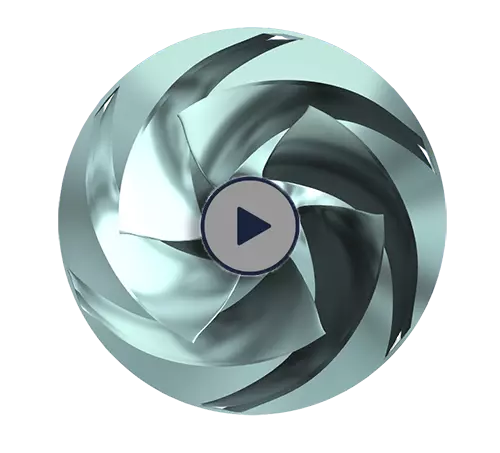
Many difficult turbomachinery problems are multi-point/multi-objective and multi-disciplinary. By parametrizing blade loading you can cover a large design space with few parameters.
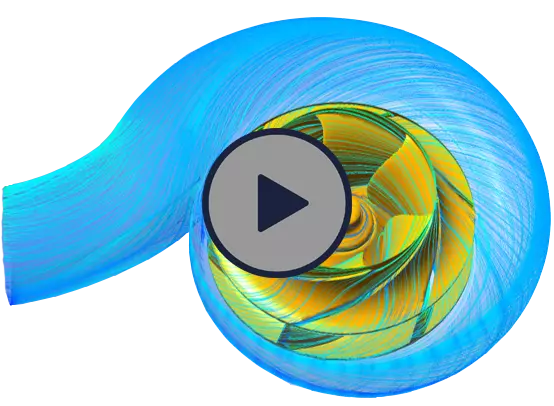
Design specifications such as mass flow rate and work coefficient are automatically satisfied. Ensuring clustering of points in the correct part of design space around the required duty point.
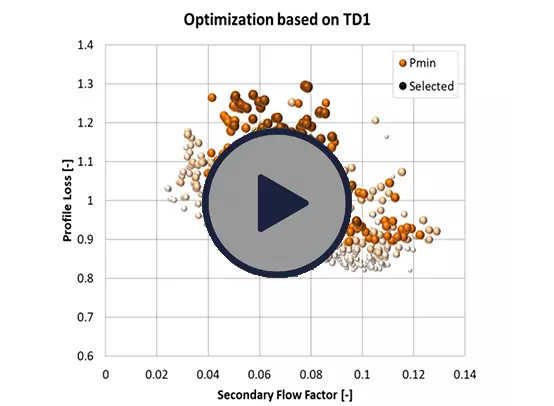
Discover Direct Optimization using TURBOdesign Optima and Inverse Design Solver TURBOdesign1 for Multiple Objectives.
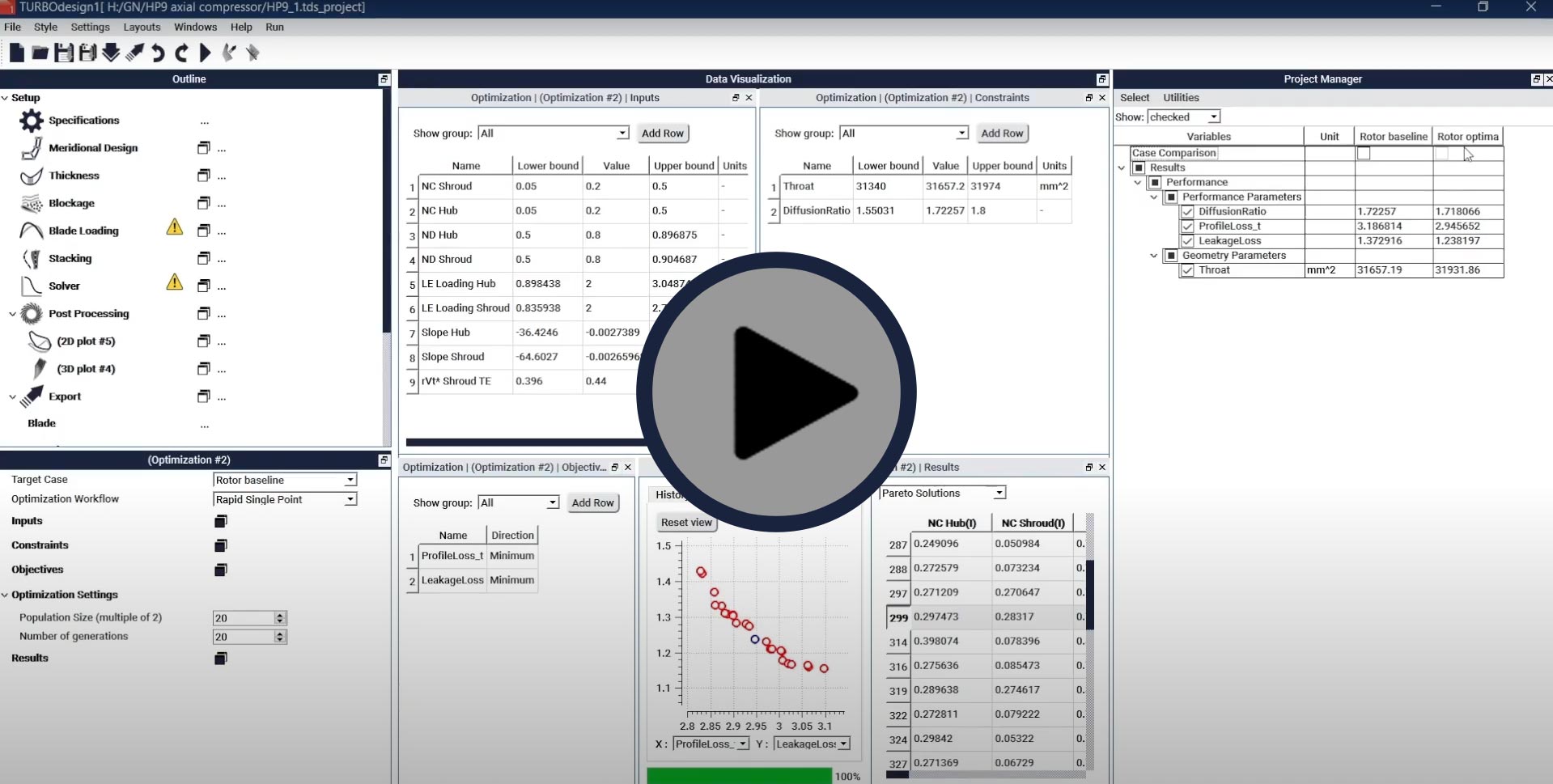
Quickly investigate a large design space using integrated fast design point optimization inside TURBOdesign1. Use machine learning to automatically set up the range of design input parameters and quickly evaluate trade-offs between aerodynamic objectives and constraints.
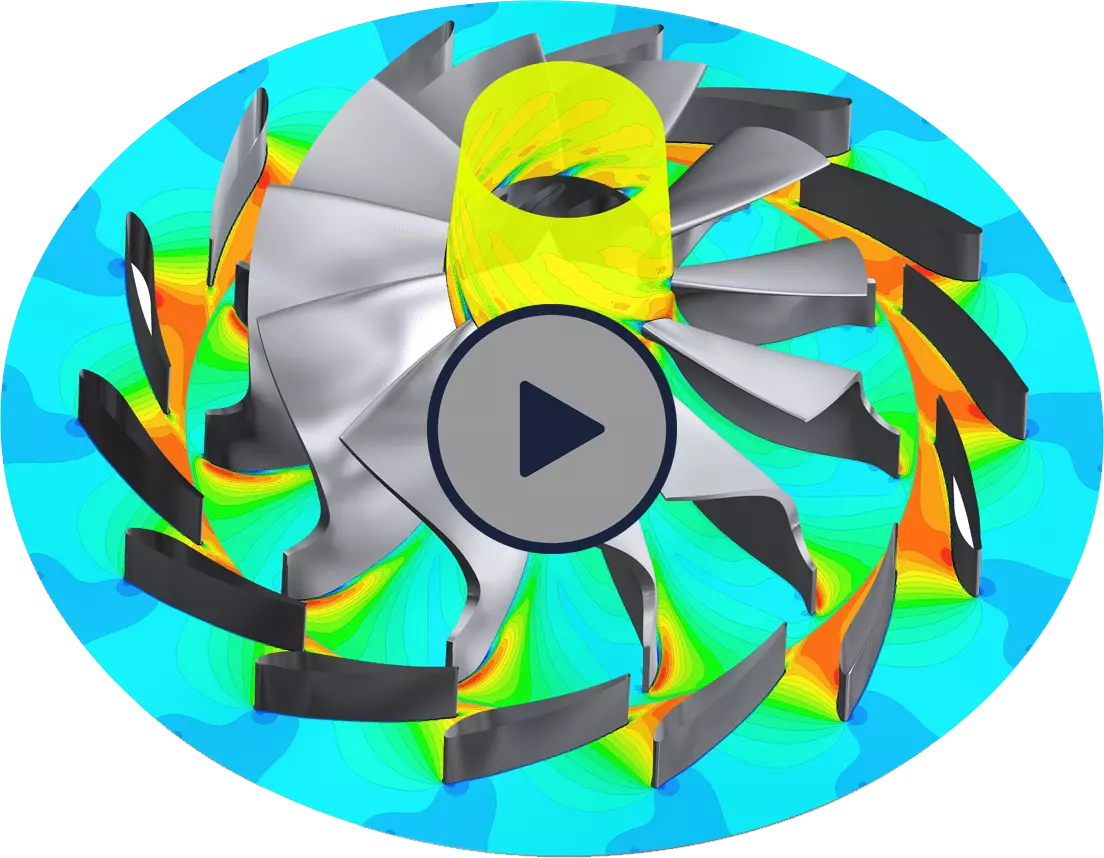
Creating accurate models makes difficult multi-point, multi-disciplinary problems easy to solve under industrial times scales.
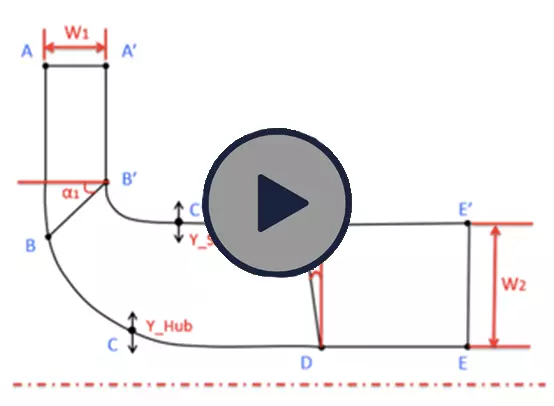
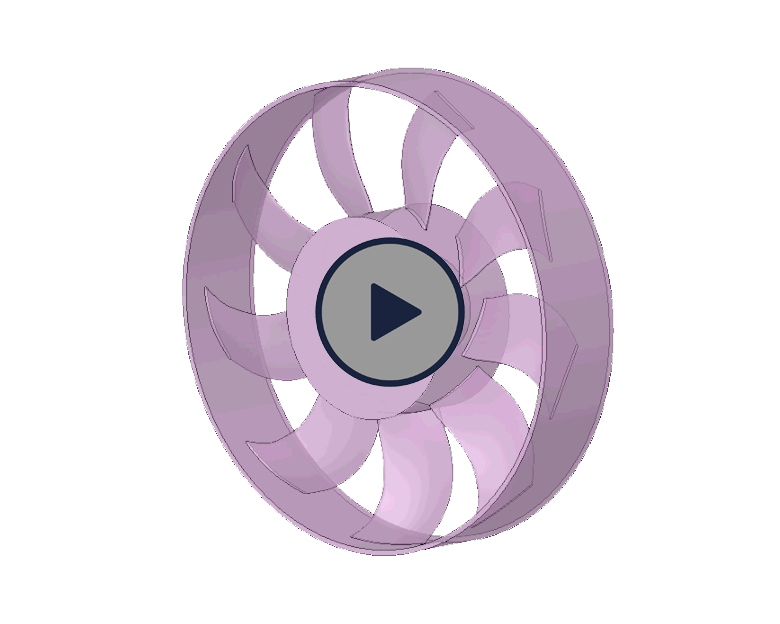
Many difficult turbomachinery problems are multi-point/multi-objective and multi-disciplinary. By parametrizing blade loading you can cover a large design space with few parameters. Typically 4-5 parameters can be used to represent 3D Blade shape.
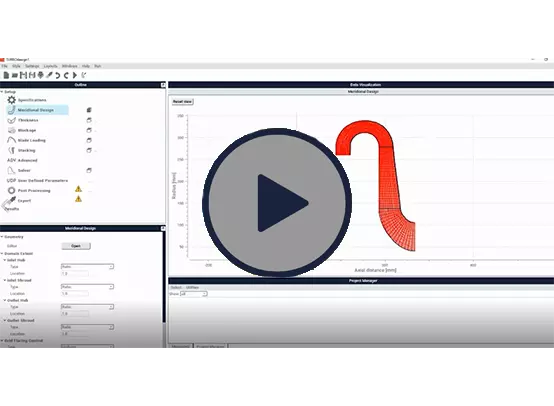
Parametric Representation of all design parameters such as meridional shape, thickness and stacking, as well as blade loading, enable rapid exploration of large design spaces. By using just one parameter major geometrical features such as axial length or radial extent can be changed while maintaining topology.
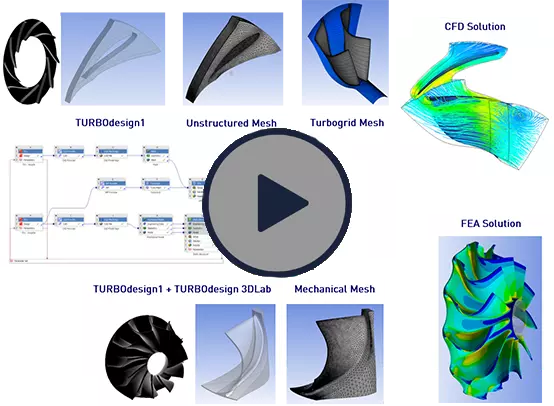
TURBOdesign Suite integrates directly with Ansys Workbench for CFD optimization.
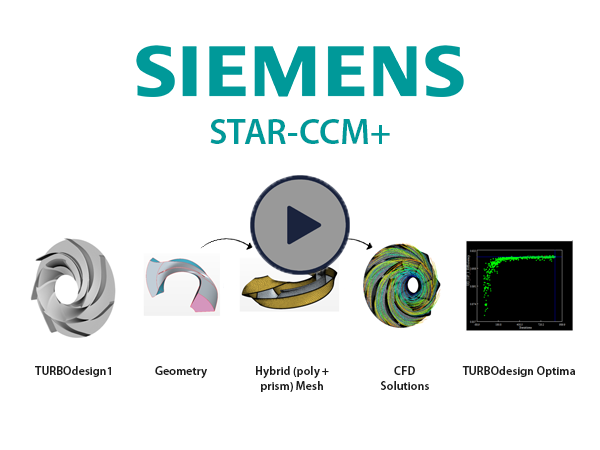
TURBOdesign Suite also integrates directly with Siemens CCM+.
Companies across the world use TURBOdesign Suite for their turbomachinery design.