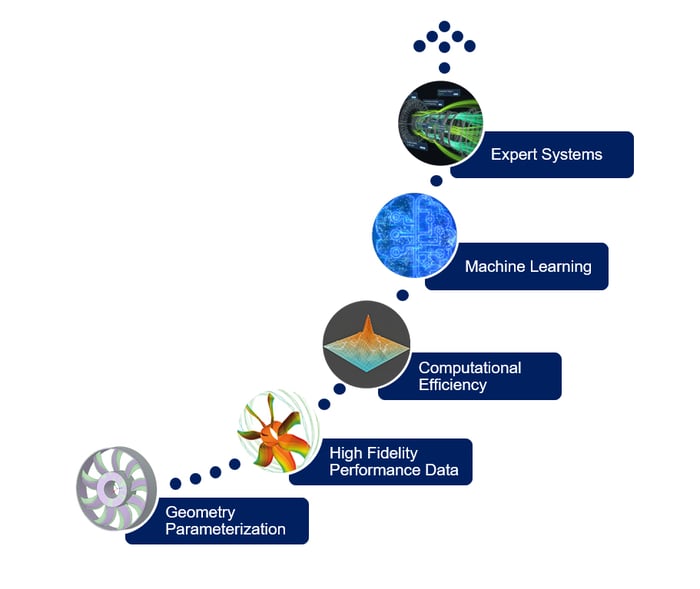
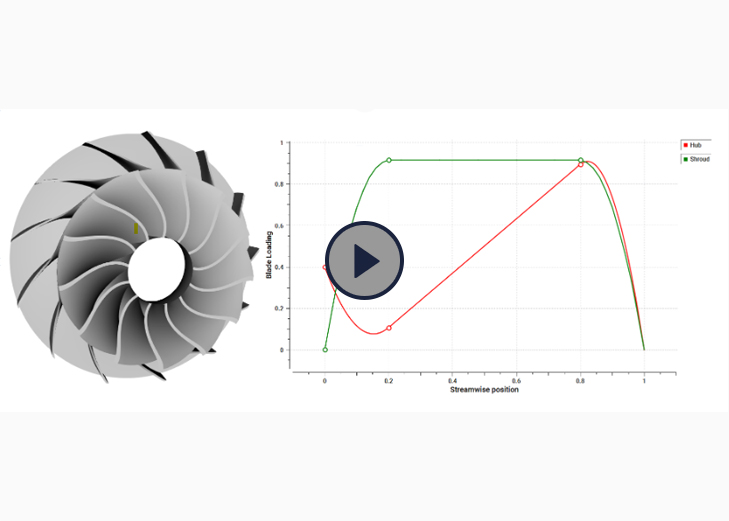
The complete, but efficient, description of the 3D blade shape in as few parameters as possible. This means doing away with the traditional ‘blade angle distribution’ paradigm and instead using blade loading and a 3D Inverse Design approach.
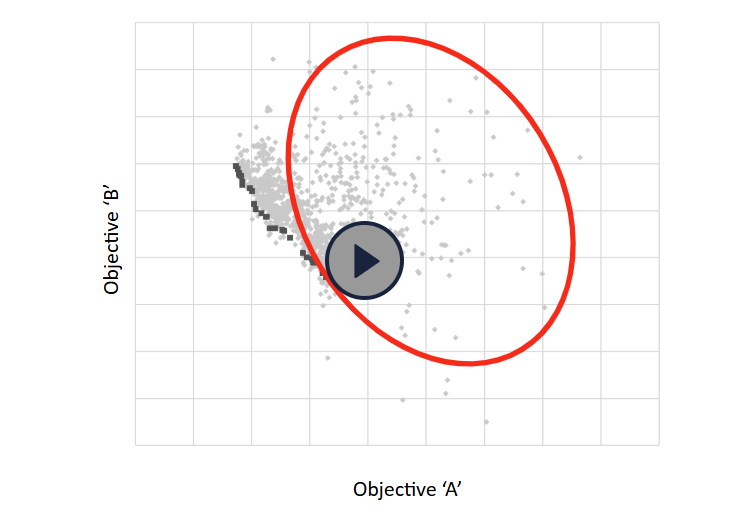
ADT’s optimizer engine - (Reactive Response Surface) RRS+CAE - dramatically reduces the number of high-fidelity simulation runs required to accurately explore the turbomachinery design space. Reducing cost and time by orders of magnitude, and making full 3D, multi-point, multi-objective blade shape optimization a reality on standard desktop hardware.
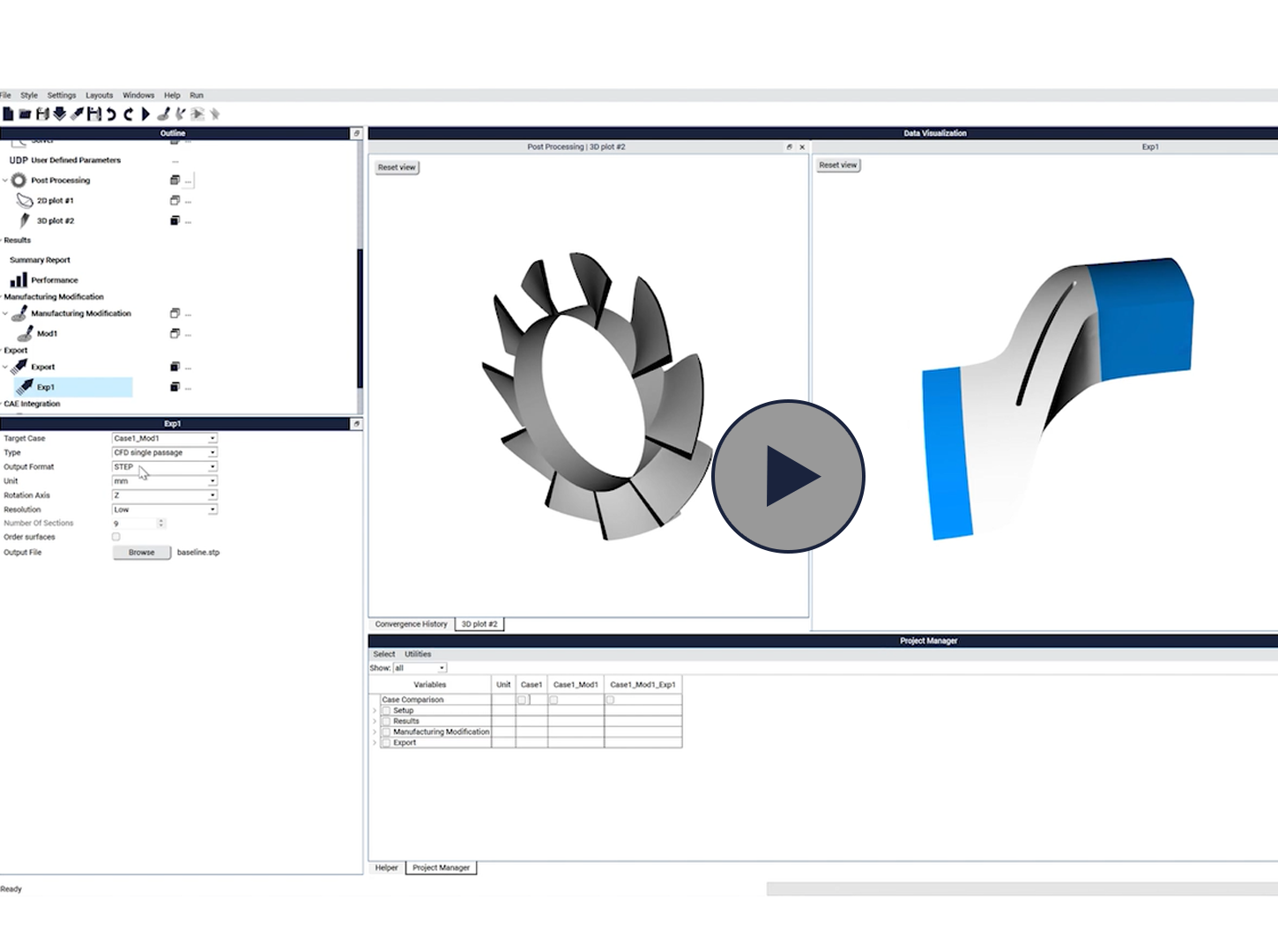
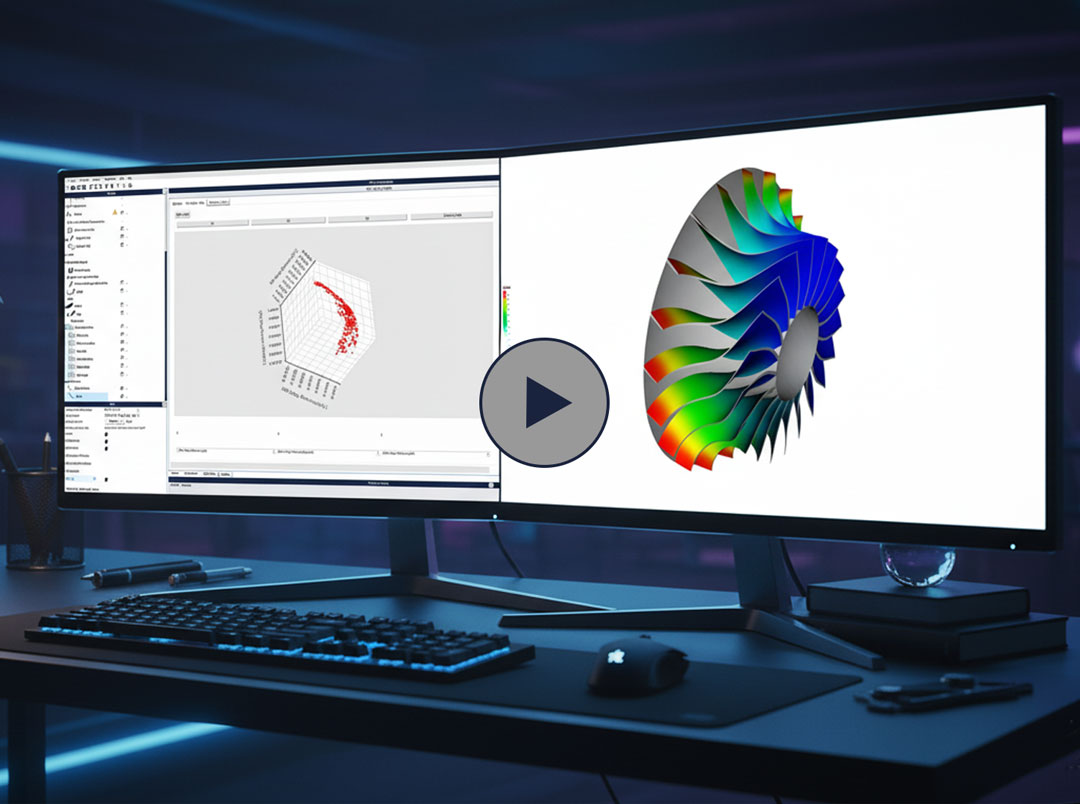
TURBOdesign1 integrates any and all CAE packages into the Reactive Response Surface (RRS) Physics-Enhanced Machine Learning system. It allows TURBOdesign1 to externally share data with 3rd CAE party packages, whilst internally building the Machine Learning Model, creating the geometry candidates, and running the exploration and exploitation of the design space.
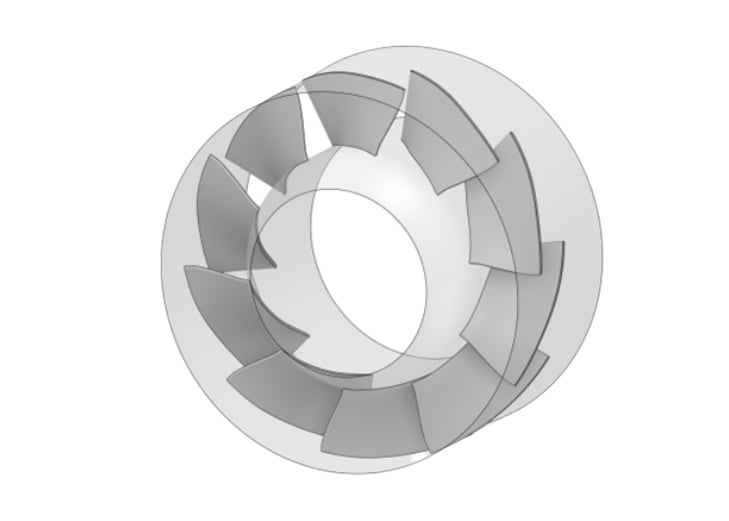
Learn how ADT's 3D Inverse Design and Reactive Response Surface combine to create an efficient machine learning tool for optimizing axial fan blades. efficiency and reduced noise with a multi-point process.
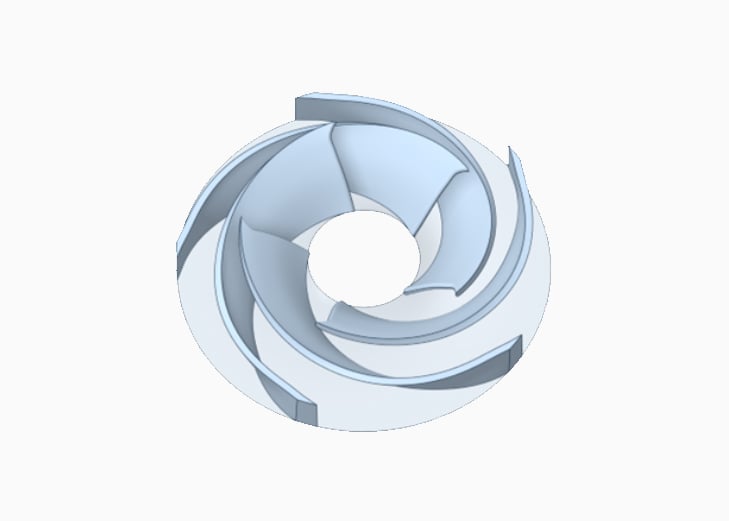
Our blog demonstrates how machine learning and 3D inverse design create optimized pumps in just hours, leading to massive efficiency gains.
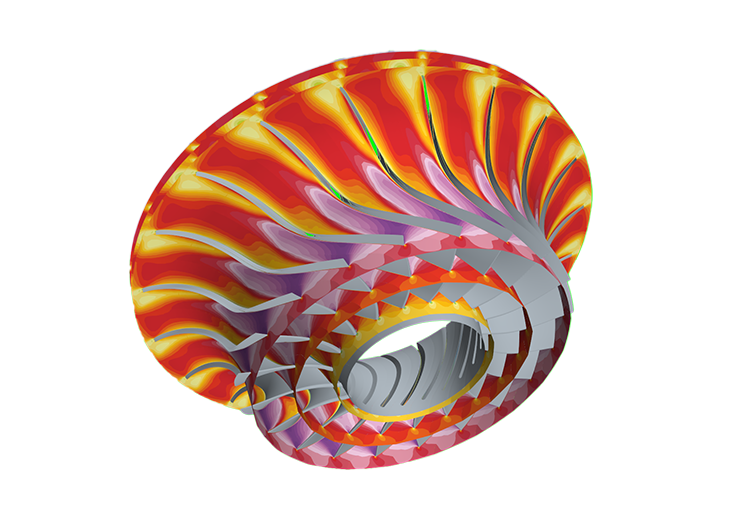
Improvements to a legacy compressor design is the challenge met by ADT's Physics-Enhanced Machine Learning system. Rapidly finding new optima which increase efficiency by 2-4 points whilst also extending map width.
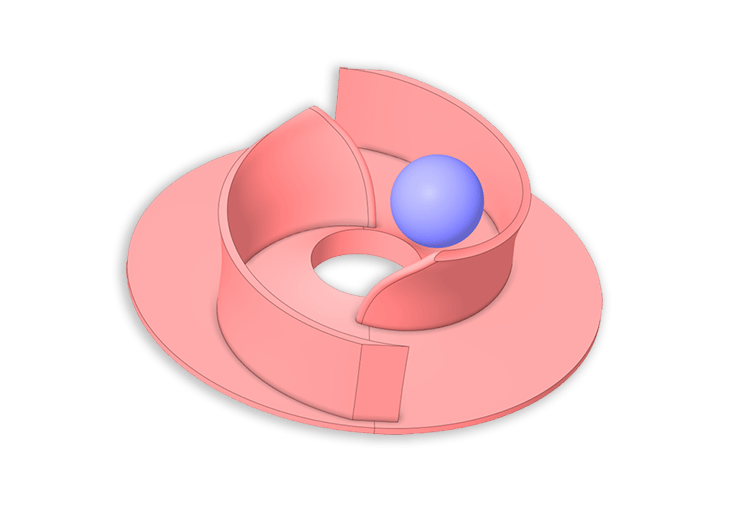
See Physics-Enhanced Machine Learning in action when designing a full stage wastewater pump (including volute). The competing objectives of efficiency, cavitation margin and solid blockage tolerance are balanced to produce excellent multi-objective performance.
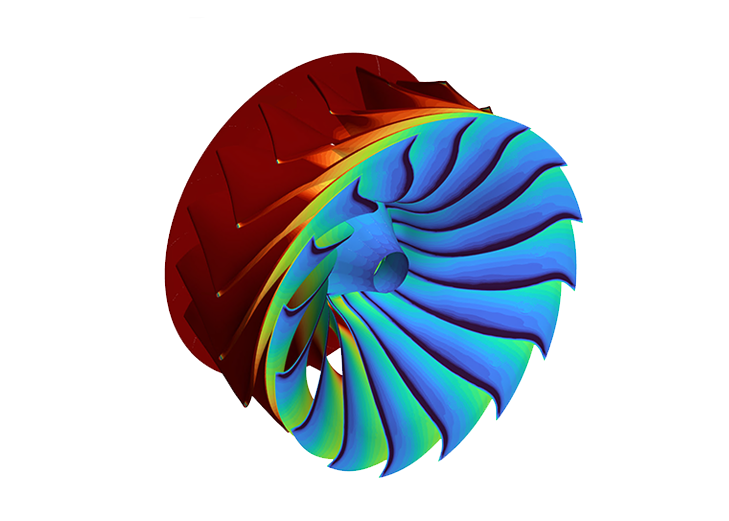
Learn how paradigm shifting designs for hydraulic power can be found using Physics-Enhanced Machine Learning (PEML). Just a few hours of computational effort on standard deskside hardware gives PEML enough data to produce designs that generate up to 28% more shaft power than the baseline design