

This was also carried out on other critical disciplines governing product design and control. Several contacts had been taken with various universities and technological centres in Europe, to identify those whose potential in terms of ‘breakthrough in turbine design’ was promising. Advanced Design Technology (ADT) was one of those selected centres of excellence that Avio Aero decided to work with.
Our major aim in using TURBOdesign1 and TURBOdesign2 was driven by awareness of the fact that technological innovation was the leading way to capture and improve visibility and the company’s appeal on the international market.
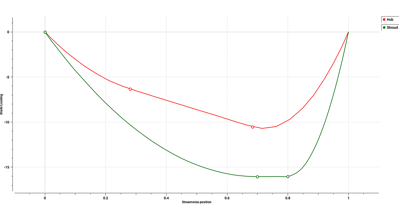
Fig1: Aft-Loading
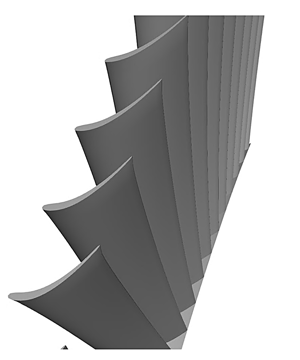
Fig2: Aft-Loaded Blade
Our main objectives in using TURBOdesign1 were based on our qualitative and quantitative requirements to improve our design system. Our main qualitative objectives were:
This was particularly important since the high-lift turbine blades concept was going to be extensively used and applied in the new turbine projects and the possibility to explore quickly a large population of design solutions was greatly appreciated.
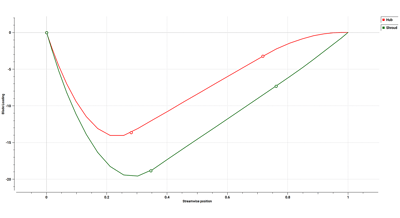 Fig3: Front-Loading
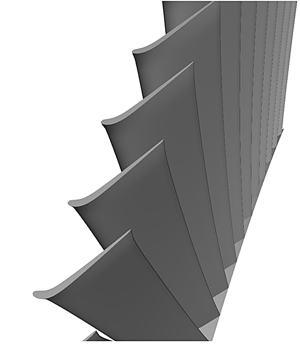
Fig4: Front-Loaded Blade
.webp?width=250&name=AnyConv.com__fig3%20(2).webp)
Fig 5: High lift turbine geometry ready to be implemented in Avio Aero products
(TURBOdesign1 code post processing)
Our quantitative objectives in using TURBOdesign1 in design of LP turbine blades were mainly related to:
Initially TURBOdesign1 was validated extensively by using 3D CFD codes and it was then integrated into the design system at Avio Aero. By using TURBOdesign1 we have been able to achieve most of our objectives to improve our design system and shorten engineering and development time. A number of Avio Aero products have since been designed by using the 3D Inverse Design technology.
Another important point of attention of the Avio Aero and ADT collaboration is the high quality of technicians and scientists working in both groups, leading to a continuous exchange of feedback and suggestions to identify the most promising paths on how to use and develop TURBOdesign1 and TURBOdesign2 codes. Our common view of the turbomachinery aerodynamic design challenge will hopefully lead to enhanced methods that can help to produce simpler, more innovative and efficient aeroengines post-processing.
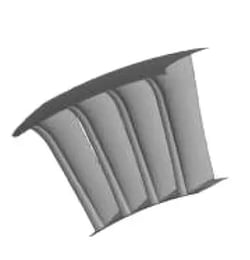
Fig 6: Endwall sweep applied to tip section for secondary flows control