
Fans and Blowers Design Software |
TURBOdesign Suite

The inverse design method can be applied to improve efficiency and noise in all types of fans and blowers at single to multiple operating points.


Our TURBOdesign Suite software applies the 3D Inverse Design method to the design of fans and blowers. With inverse design you can optimize performance, increase efficiency and reduce development time by putting designers in direct control of the aerodynamic design process.


Breakthrough Designs


An inverse approach can be used to design high efficiency fans and blowers.

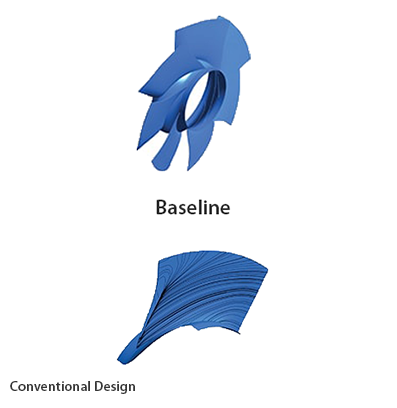
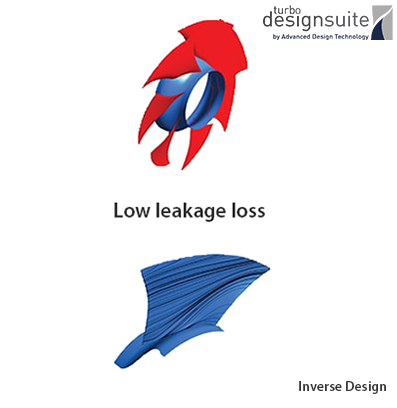
A comparison between CFD results of TURBOdesign1 versus conventional design

In many axial fan applications the performance is affected by large tip leakage flows. The 3D inverse design method allows for direct control of blade loading which drives tip leakage flow. In this design the tip leakage loss values predicted by inverse design method was used to arrive at the optimized geometry that reduced leakage losses and improved efficiency for a truck cooling fan.

Fan Applications


A brief summary introduction to the different fan applications you can use TURBOdesign Suite for

Case Studies


Success Stories - how customers overcame design challenges by using TURBOdesign

Consultancy Summaries


ADT's Engineering turnkey turbomachinery solutions for leading manufacturers across key industries

Webinars

Don't miss out. View our webinars here.

Watch Now

Publications

Interested in our research? Access our technical papers here.

Discover our findings

Blog Articles

Enhance your knowledge. Explore our blog articles here.

Get Inspired

Frequently Asked Questions

 . 

Multi-stage fans use multiple impellers in series to achieve higher pressure rises, while contra-rotating designs feature two impellers spinning in opposite directions to eliminate swirl and improve efficiency. Single-stage fans have one impeller and are simpler but limited in pressure capability. TURBOdesign Suite handles all configurations with our 3D Inverse Design technology.

Direct design modifies geometry (blade angles, thickness) and analyzes performance through CFD iterations which are slow and trial-and-error based. 3D Inverse Design starts with desired performance (pressure/loading distributions) and automatically generates the blade geometry to achieve it. TURBOdesign's 3D Inverse Design is faster, rooted in the physics of the machine, and reaches better conditioned solutions than with direct design.

TURBOdesign Suite uses 3D Inverse Design methodology that allows engineers to specify desired aerodynamic performance and automatically generates the corresponding 3D blade geometry. The suite provides integrated tools for 3D blade design, volute/scroll geometries, meanline design for performance estimation, and multi-point optimization to ensure optimal performance across various operating conditions, giving designers direct control over aerodynamic characteristics for all fan types within a streamlined workflow.

The meanline and sizing code TURBOdesign Pre uses the Cordier diagram to provide general guidelines as to the relationship between a fan’s specific speed and its specific diameter. The 3D Inverse Design approach in TURBOdesign Suite builds on this initial specification by allowing designers to directly specify desired flow and pressure characteristics, then automatically generating the 3D blade geometry to achieve those performance targets

Multi-disciplinary optimization can include acoustic and vibration criteria as objectives. Noise reduction is critical in modern fan and blower design, particularly for automotive and HVAC applications. TURBOdesign Suite addresses acoustic performance through 3D Inverse Design methodology, proven to achieve both higher efficiency and significantly lower noise levels than conventional approaches. The inverse design method allows engineers to simultaneously optimize for aerodynamic performance while minimizing noise through blade loading optimization and geometric modifications.

TURBOdesign Suite is used by many world-leading fan manufacturers, medium sized providers and start-ups, including ebm-papst, Greenheck, Hanon System,  Valeo and Daikin.

.